 TEXA
TEXA
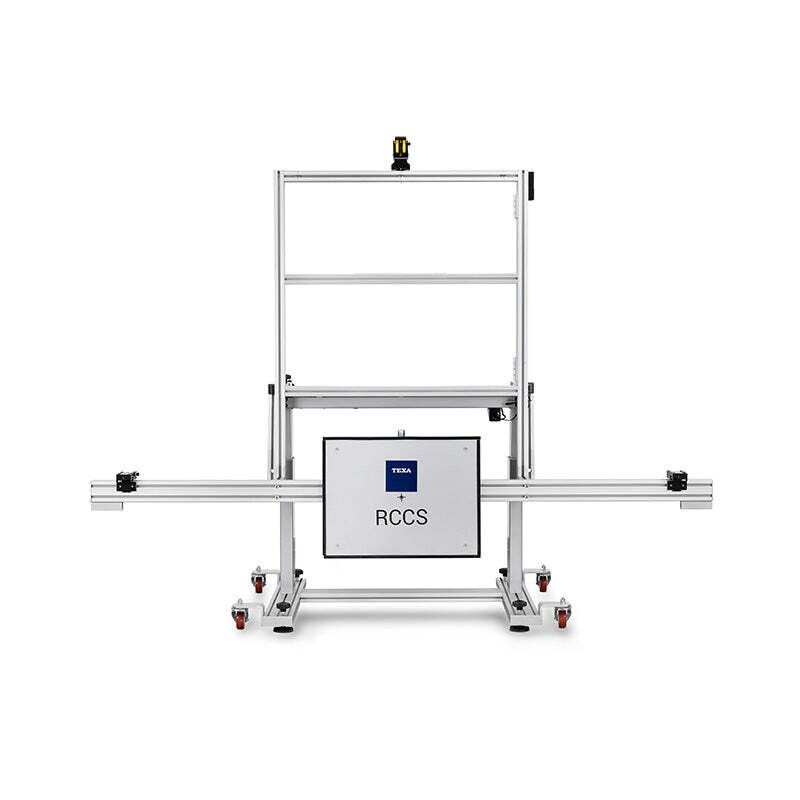
Texa ADAS RCCS 3 with Panels - TEXARCC3M
$34,999.00
Authorized ADAS Brand
TEXA brings ADAS calibration to both light vehicles and heavy commercial trucks with the RCCS calibration system and IDC5 diagnostic software — a strong choice for shops that work across cars, vans, and trucks on one platform.
Talk to an ADAS specialist 866-217-0063TEXA
TEXA
$34,999.00
 TEXA
TEXA
$14,100.00
 TEXA
TEXA
$3,234.00
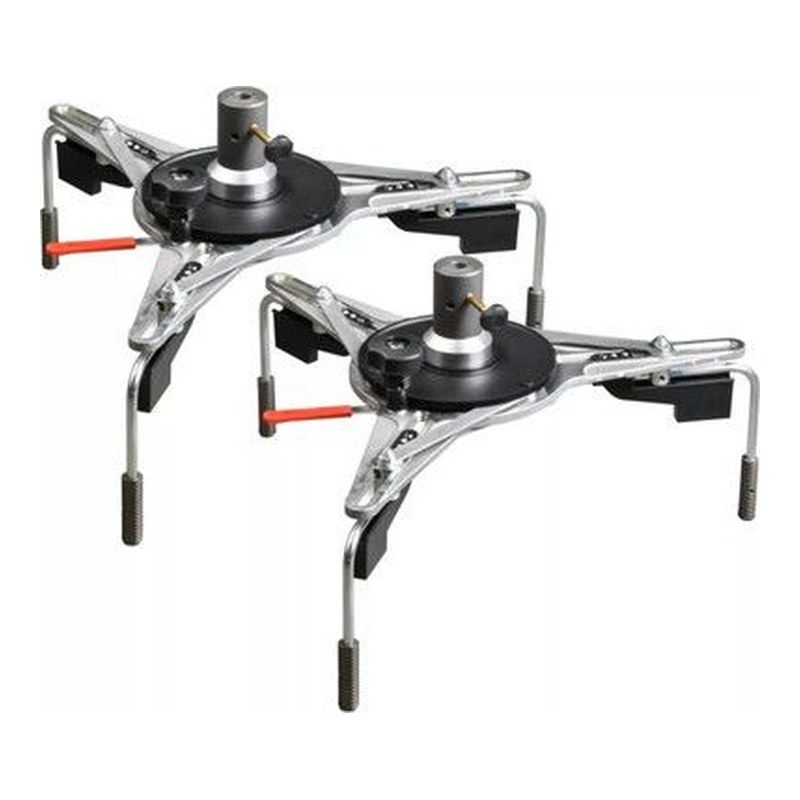 TEXA
TEXA
$1,983.00
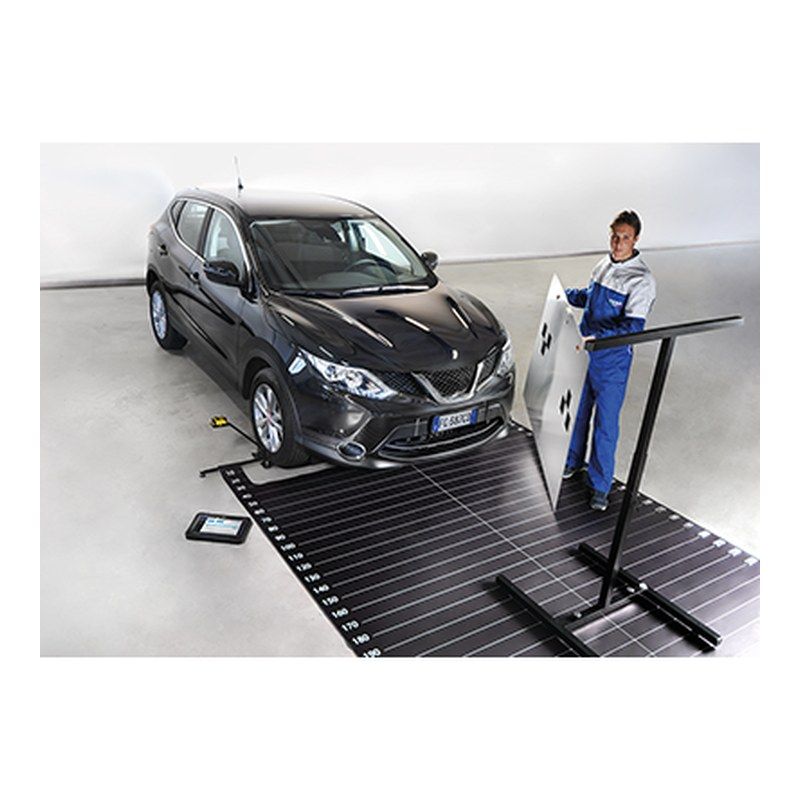 TEXA
TEXA
$1,855.00
Why TEXA?
One platform for light vehicles and heavy commercial trucks — rare in the ADAS world.
The RCCS frame positions camera and radar targets with laser-guided accuracy.
IDC5 software ties calibration to full diagnostics and broad vehicle coverage.
A natural fit for mixed shops that see cars, vans, and trucks in the same bay.
Backed by TEXA global engineering and frequent software releases.
Most ADAS calibration equipment forces a shop to pick a lane. You buy a passenger-car system, or you buy a heavy-truck system, and the two rarely talk to each other or share hardware. TEXA, the Italian diagnostic manufacturer based in Monastier di Treviso, took a different approach. Its ADAS lineup is built around a common idea: one diagnostic software family (IDC5, now IDC6) driving a family of calibration hardware that spans passenger cars, light commercial vehicles, heavy-duty trucks, and even motorcycles. For a collision or mechanical shop that sees mixed work — a Subaru one hour and a Class 8 tractor the next — that single-ecosystem approach is the central reason to look at TEXA.
This page walks through what TEXA actually offers for ADAS calibration: the RCCS (Radar and Camera Calibration System) for cars and its current RCCS 3 / RCCS 3 EVO generation, the CCS2 Dynamics mobile frame for trucks, the IDC5 and IDC6 diagnostic software that runs both, and where the truck coverage and certification stand. We pull specifics from TEXA’s own product pages and from North American and European distributors, and where a detail varies by kit or by market, we say so plainly rather than guess.
Advanced Driver Assistance Systems — adaptive cruise control (ACC), lane departure warning (LDW), forward collision warning (FCW), automatic emergency braking (AEB/AEBS), blind-spot monitoring, and 360° surround-view — rely on cameras, radar units, lidar, and other sensors that are aimed with very tight tolerances. A forward camera mounted at the windshield or a radar behind the front bumper has to “see” the road exactly where the vehicle manufacturer expects it to. A fraction of a degree of misalignment moves the sensor’s aim point meters down the road.
That is why calibration is required after far more operations than people expect. TEXA’s own materials list the common triggers: replacing a camera, radar, lidar, or sensor; replacing a windshield; replacing or repainting a bumper; suspension repair; a wheel alignment; changing tires; and replacing an engine or other control unit. Any of these can shift a sensor’s physical aim or change the vehicle’s geometry relative to the road. After the work, the sensor must be told where it is again — that is calibration.
Calibrations come in two forms, and a serious shop needs both:
TEXA’s hardware handles the static side; the IDC5/IDC6 software handles the diagnostic communication and walks the technician through both static setup and the on-road dynamic adaptation procedure.
RCCS stands for Radar and Camera Calibration System. It is TEXA’s static calibration rig for passenger cars, SUVs, and light-duty vehicles. The line has evolved through several generations — RCCS, RCCS 2, and the current RCCS 3 / RCCS 3 EVO — and the most important change over time was the move from purely physical printed target panels to a large digital screen that displays targets electronically.
The earlier RCCS and RCCS 2 established the mechanical design that TEXA still uses. The RCCS 2 has a robust main column with electrically powered height adjustment and a knob that tilts the target carrier relative to the vehicle. The horizontal crossbar carries two distance meters and a sliding reflector plate with a central laser, and an additional laser at the top of the structure locates the centerline of the vehicle simply by pointing at the front badge. TEXA designed this so a single technician can align the system to the car without a second set of hands.
A feature worth calling out is TEXA’s ALIGNMENT CHECK software application. Before any radar or camera calibration, it runs two quick checks: it verifies the RCCS unit’s alignment relative to the vehicle’s thrust angle and the garage floor, and it performs a check on wheel alignment. This matters because if the vehicle’s thrust line is off, or the frame is not square to the car, the calibration target is in the wrong place even if every other step is perfect. TEXA building this check into the workflow reflects a real-world truth: alignment and ADAS calibration are linked, and skipping the geometry check produces a “successful” calibration that is actually wrong.
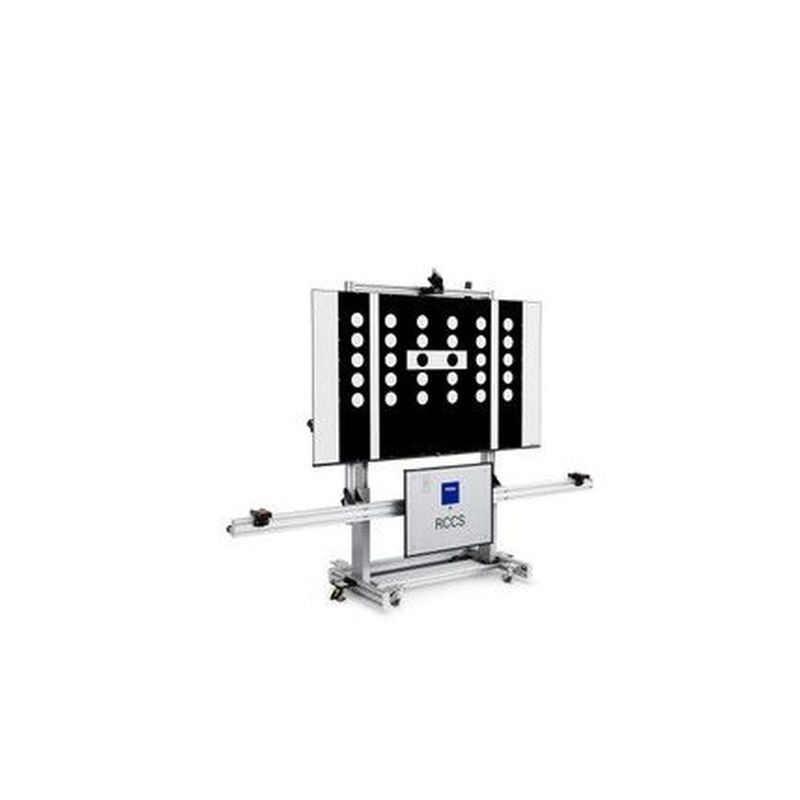
The current generation, RCCS 3 and the top-tier RCCS 3 EVO, replaces stacks of printed target panels with a 75-inch 4K UHD monitor that displays digital targets in true 1:1 scale according to each manufacturer’s specification. The practical benefits are real: you are not storing, sorting, and protecting dozens of large cardboard/plastic panels, and the system can call up the correct target image for the make and model automatically through the software. For a shop short on storage and tired of damaged panels, that alone is a meaningful change.
TEXA still offers RCCS 3 in a panel-based configuration as well, so the line is generally available as “RCCS 3 with Monitor” and “RCCS 3 with Panels.” The RCCS 3 EVO is the top-of-range build, with the option to be used with a toe-and-thrust-axis check kit or in optical alignment mode, depending on configuration.
Typical components in an RCCS 3 EVO kit (as listed by North American distributors) include:
Important to budget correctly: the calibration hardware kit typically does not include the diagnostic tablet (AXONE/AXONE Voice) and the IDC6 software license, or in some cases a compatible TEXA VCI. Those are purchased separately. Always confirm exactly what a given part number includes before you buy, because “RCCS 3 kit” can mean the frame only, the frame plus monitor, or a fuller package depending on the seller.
The table below summarizes how the RCCS configurations differ. Exact contents, part numbers, and pricing vary by distributor and by market, so treat prices as representative and confirm current figures for your region and the specific kit.
| Feature | RCCS 2 | RCCS 3 (Panels) | RCCS 3 with 75″ Monitor | RCCS 3 EVO |
|---|---|---|---|---|
| Target type | Physical printed panels | Physical printed panels | Digital targets on 75″ 4K UHD screen | Digital targets on 75″ 4K UHD screen (top-tier build) |
| Vehicle scope | Cars / light vehicles | Cars / light vehicles | Cars / light vehicles | Cars / light vehicles |
| Height adjustment | Electrically powered | Powered | Powered | Powered |
| Alignment / centering aids | Dual distance meters, centering laser, badge-pointing laser, ALIGNMENT CHECK app | Centering laser + ALIGNMENT CHECK | Bluetooth laser distance sensors, angle finder, centering laser | Bluetooth laser sensors; optional toe/thrust-axis check kit or optical alignment mode |
| Panel storage burden | High (store all panels) | High (store all panels) | Low (most targets digital) | Low (most targets digital) |
| Software | IDC5 (upgradeable path to IDC6) | IDC5 / IDC6 | IDC6 | IDC6 |
| Representative price (USD, hardware only) | Varies — confirm | Varies — confirm | ~$16,800 (kit-dependent) | ~$14,100–$27,000 depending on configuration |
The price spread on the EVO line is wide because “EVO” can refer to the base digital frame on its own or a fully loaded kit with monitor, clamps, and a full set of make-specific accessories. Get an itemized quote.
This is where TEXA separates itself from most passenger-car-focused brands. CCS2 Dynamics is TEXA’s transportable calibration unit for the calibration of radar and cameras on cars, light commercial vehicles, and heavy-duty vehicles. The same diagnostic software ecosystem that runs the car-side RCCS also runs the truck-side CCS2 — that is the “one platform spanning cars and trucks” story in practical terms.
Heavy trucks present two problems passenger cars do not: the sensors sit high and far forward on a tall cab, and the vehicles are often too big to bring to a fixed calibration bay, so the equipment has to come to the truck. CCS2 Dynamics is engineered around both realities:
On commercial vehicles, CCS2 Dynamics addresses the high-stakes safety systems: Adaptive Cruise Control, Lane Departure Warning, Forward Collision Warning, and the Advanced Emergency Braking System (AEBS). The truck ADAS kit adds the hardware these vehicles require, including a set of clamps with laser pointers and the laser used to set the Adaptive Cruise Control radar aim. Distributor materials cite multi-brand truck coverage with targets and accessories for makes such as MAN, Scania, Iveco, Volvo, and Renault, and Bendix-related adapter hardware is offered for North American radar systems (for example, a Bendix target adapter kit). Confirm the exact brand/model coverage for the specific trucks you service, because heavy-duty ADAS coverage moves quickly and varies by kit and software level.
On the software side, TRUCK IDC6 guides the operator step by step, including through vehicles that require a dynamic, on-road adaptation procedure after the static setup. That matters in heavy-duty work, where AEBS and ACC frequently need a learning drive to complete.
ADAS is no longer optional on commercial vehicles. Forward collision mitigation and emergency braking are increasingly standard or mandated on new Class 6–8 trucks, and any windshield replacement, bumper/fascia work, radar bracket disturbance, or front-end collision repair on these vehicles can require recalibration. A shop that already touches trucks — fleet maintenance, heavy collision, glass — and turns away ADAS work is leaving revenue on the table and, more importantly, potentially returning vehicles to service with mis-aimed safety systems. TEXA’s truck-capable hardware exists precisely because this work is migrating from the dealer-only world into independent and fleet shops.
The calibration frame is only half the system. The other half is TEXA’s diagnostic software, which establishes the secure communication with the vehicle, reads and clears fault codes, initiates the calibration routine, and provides the measurements and step-by-step procedure the technician follows. TEXA’s software comes in two generations.
IDC5 is TEXA’s long-running multi-brand, multi-environment diagnostic software, organized into modules so a shop can license only what it needs:
Each module covers diagnostics and, where applicable, the ADAS calibration routines for that environment. The same modular structure carries over to IDC6.
IDC6 is TEXA’s current diagnostic software and is the recommended platform going forward. Compared to IDC5, TEXA highlights:
An important practical point: TEXA has stated that IDC5 continues to operate at your last update level, but new vehicle coverage, AI guidance, and secure-gateway access come through IDC6. If you are buying ADAS hardware today, you want IDC6, because newer vehicles — exactly the ones with the most complex ADAS — are where coverage is being added. Note that some IDC6 features and the latest protocols are best paired with current TEXA interface hardware (TEXA references the Multihub 2 VCI for optimal protocol coverage); confirm VCI compatibility with your chosen kit.
For commercial work, IDC6 TRUCK is described as covering North American and European Class 6–8 vehicles, with optional licenses for off-highway, marine, motorcycle, and automotive. It is particularly strong on European heavy trucks — Volvo, Mercedes-Benz, MAN, Scania, Iveco, Renault — alongside the North American HD lineup (including Mack, which shares Volvo Group lineage). This breadth is the engine behind the CCS2 Dynamics truck calibration capability.
The reason to consider TEXA over a car-only or truck-only specialist comes down to consolidation. With TEXA, the same software family and the same operator workflow extend across:
TEXA states its combined car-and-truck ADAS coverage is meaningfully broader than typical single-market competitors. Coverage claims like “30% more” come from TEXA’s own marketing, so weigh them against your actual vehicle mix — but the structural advantage of one platform, one learning curve, and one update pipeline across multiple vehicle types is real and is the clearest differentiator of the TEXA approach.
TEXA’s RCCS and RCCS 2 calibration systems were submitted to TÜV Rheinland and earned recognition as qualified ADAS calibration equipment. According to TEXA, testing was carried out at the Vairano proving ground, and the results — measured by vehicle ADAS performance after calibration — matched what is achieved using the manufacturer’s original calibration equipment. For a shop, third-party validation from an independent body like TÜV Rheinland is worth more than any in-house accuracy claim: it is evidence the equipment can return a vehicle’s safety systems to OEM-equivalent function when the procedure is followed correctly.
That last qualifier matters. No calibration system, TEXA or otherwise, produces a correct result if the prerequisites are skipped. Tire pressures, vehicle load, fuel level, a level floor, correct thrust angle, and proper frame-to-vehicle alignment all affect the outcome. TEXA’s built-in ALIGNMENT CHECK and guided positioning reduce the chance of error, but the technician still owns the setup.
TEXA’s ADAS offering is best understood as a system, not a single product. The RCCS 3 / RCCS 3 EVO handles cars with digital targets on a 75″ 4K screen; the CCS2 Dynamics handles light commercial and heavy-duty trucks on a transportable, height-adjustable mobile frame; ARAS Bike covers motorcycles; and IDC5/IDC6 ties all of it together with one diagnostic workflow, TÜV Rheinland–qualified accuracy on the core systems, and continuously expanding coverage. If your shop touches both cars and trucks — or expects to — TEXA’s one-platform approach is the strongest argument in its favor, because you are buying into a single ecosystem rather than maintaining two separate ones.
Questions
Yes — TEXA is one of the few ADAS platforms that spans light vehicles and heavy commercial trucks. The exact coverage depends on the RCCS configuration and IDC5 license; we will confirm for your vehicle mix.
RCCS (Radar & Camera Calibration System) is TEXA wheeled calibration hardware that positions targets for front-camera and radar calibration, guided by the diagnostic software.
Yes — IDC5 runs the calibration procedures and communicates with the vehicle. Licensing and coverage vary by package; ask us what is included.
TEXA supports both, depending on what each vehicle requires.
Learn More
Talk to an ADAS specialist — we'll match the right TEXA equipment to your vehicles, bay space, and workflow.