 Launch
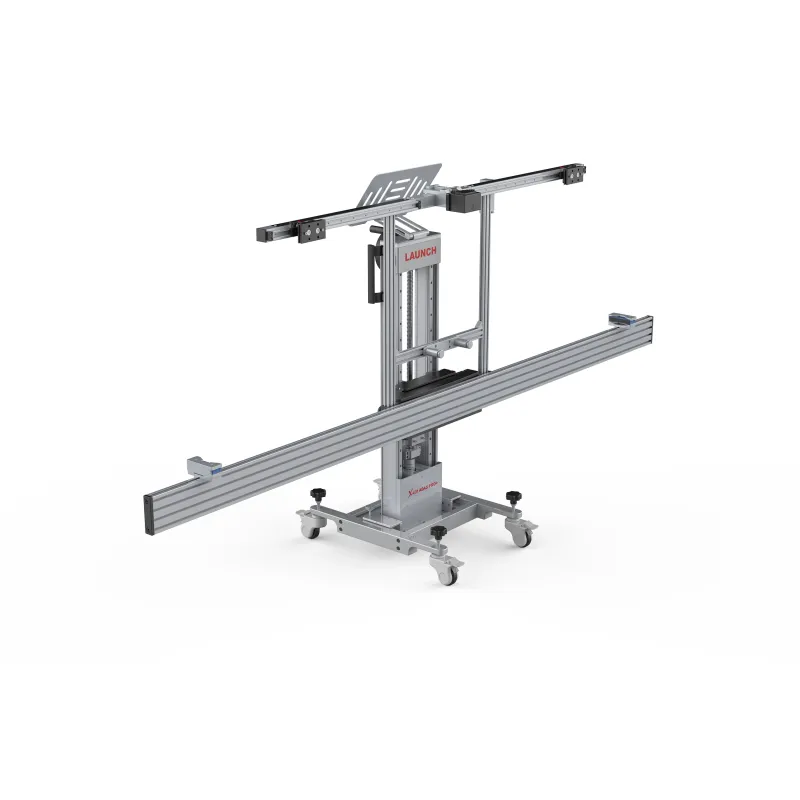
Launch Tech USA ADAS Pro Plus Premium Configuration
$34,415.37
Authorized ADAS Brand
Launch X-431 ADAS systems pair calibration frames and target boards with Launch diagnostic tablets, offering a cost-effective route into camera, radar, around-view, and night-vision calibration.
Talk to an ADAS specialist 866-217-0063Launch
Launch
$34,415.37
 Launch
$32,631.57
 Launch
$28,748.67
 Launch
$24,095.00
 Launch
$23,157.88
Why Launch?
A cost-effective way into professional ADAS calibration.
X-431 ADAS pairs calibration frames and target boards with Launch tablets.
Coverage for front camera, radar, around-view, and night-vision systems.
Mobile and fixed-frame configurations to suit different bays.
If you run a collision or mechanical shop and you have watched ADAS calibration volume grow on every windshield replacement, bumper job, and suspension repair that crosses your bays, you have probably reached the same conclusion most shop owners do: you either start calibrating in-house or you keep paying a sublet provider and waiting on their schedule. The barrier has always been the equipment cost. A full Hunter or Bosch frame package with a wheel aligner front end can run well into five and six figures before you have calibrated a single vehicle.
Launch built the X-431 ADAS line to lower that barrier. It is a manual, laser-aligned static calibration frame system that uses OE-pattern targets and runs the calibration routines through Launch’s own X-431 scan tools. You do not get robotic frame positioning or camera-based vehicle measurement like the premium tier offers, and the coverage, while broad, does not match the deepest North American libraries. What you do get is a real, OE-target calibration platform you can buy in stages, fold into the trunk of a mid-size car, and grow into as your volume justifies more target boards. For a lot of shops, that is exactly the right entry point.
This page walks through how the X-431 ADAS system is built, the differences between the Mobile, Pro, and Pro Plus frames, the Premium target configuration, the Radar 3-in-1 with Doppler simulator, night vision and around-view targets, vehicle coverage, and where Launch genuinely fits in a shop versus where you may outgrow it.
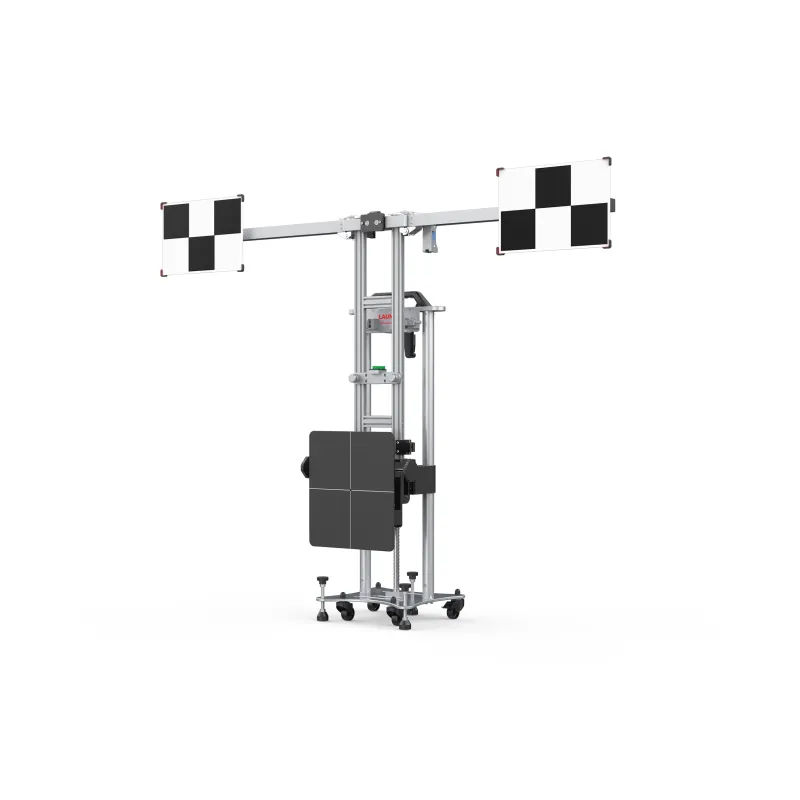
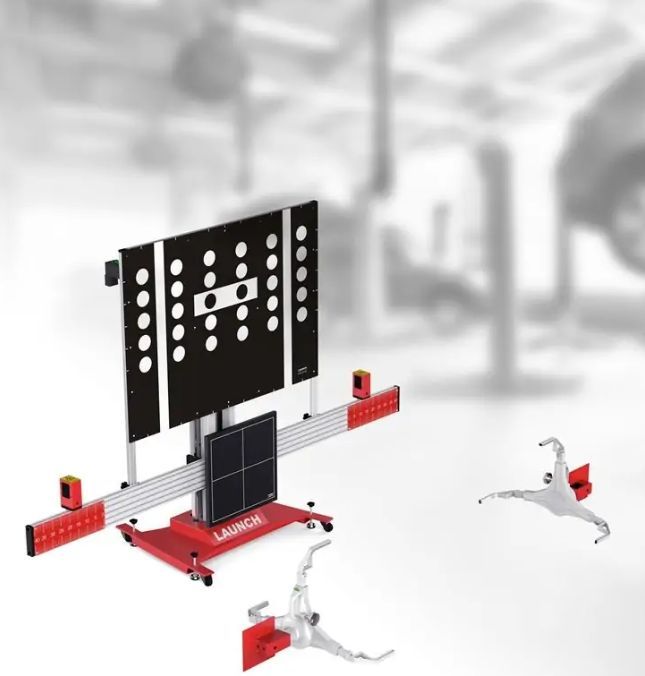
Every X-431 ADAS package is built around the same core idea: a portable frame holds OE-pattern target boards at a precise, repeatable position relative to the vehicle’s thrust line, and the X-431 scan tool walks you through the static calibration procedure. There is no all-in-one robotic positioning. You set the frame using lasers and physical measurement, mount the correct target for the system you are calibrating, and the software does the rest.
The base hardware that ships in even the entry-level package is consistent across the line. According to Launch’s component breakdown, the frame kit includes:
That hardware is what lets a manual frame hit OE distance and centering tolerances without a camera-based measurement system. The trade-off is that setup discipline matters — your accuracy depends on the technician squaring the frame correctly, which is why the lasers and fine-tuning controls are central to the design.
The single most important thing to understand about buying an X-431 ADAS system is that the frame is the cheap part. The targets are where the money goes, and the targets are what determine which systems and which makes you can calibrate. Launch organizes its targets into families:
This modularity is the heart of Launch’s value pitch. You can start with an LDW-only package to capture windshield-replacement calibrations, then add radar, AVM, BSD, and night vision targets as you take on more of those jobs — without rebuying the frame.
Launch’s lineup has evolved, and the naming can be confusing because distributors still list older configurations alongside newer ones. Here is how to read it.
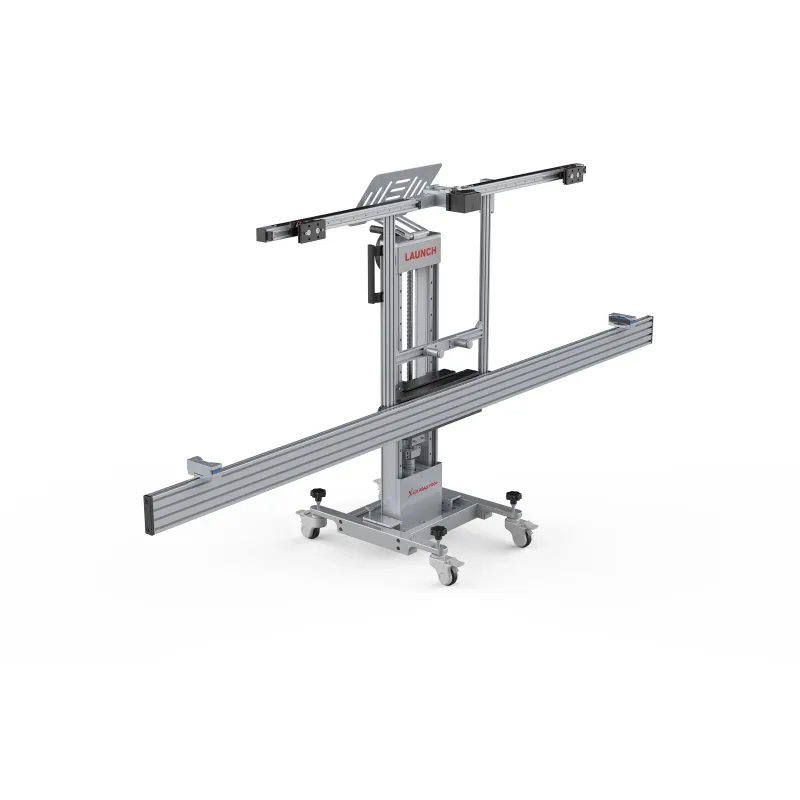
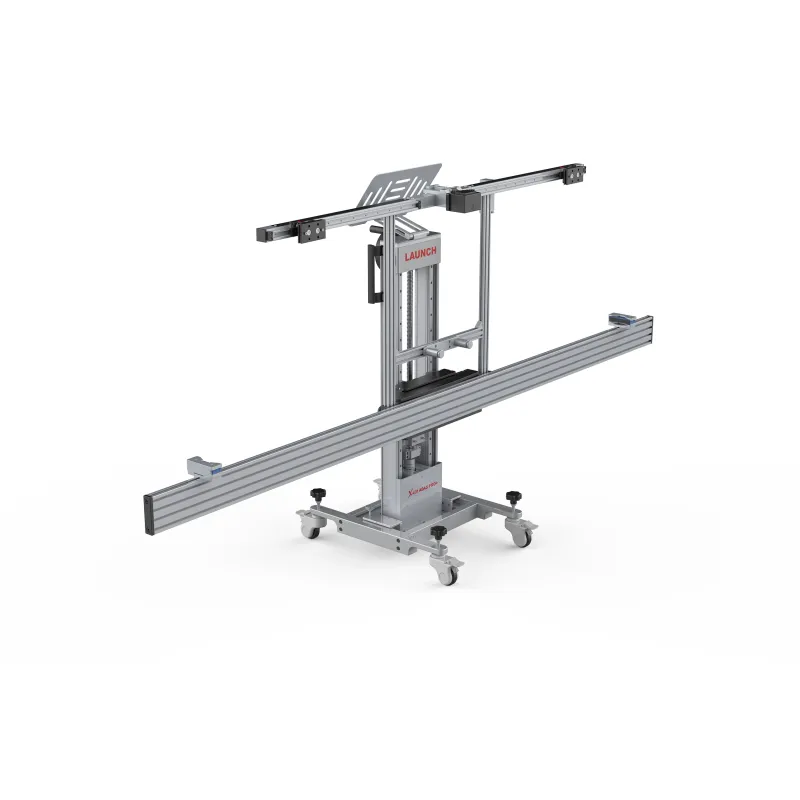
The Mobile is the portable, foldable frame aimed at shops that want a true mobile or space-saving calibration rig. The two arms and base fold down so the whole frame fits in the trunk of a mid-size vehicle, which is the right answer for glass installers and mobile calibration techs, or for shops short on bay space who tear down and set up per job. Launch describes the compact design as reclaiming more than 50% of the working footprint of a fixed system.
The Mobile is sold in tiers:
The Pro and Pro Plus are the heavier-duty, higher-precision frames. The Pro Plus is the current flagship and, per Launch, replaces and combines the functions of the earlier standalone X-431 ADAS Pro and X-431 ADAS Mobile. Key upgrades over the Mobile frame:
Like the Mobile, Pro Plus is sold in Standard, Deluxe, and Premium target configurations. The frame and alignment story is the same; the difference between Standard, Deluxe, and Premium is how many target families ship in the box.
Front camera (LDW) work covers the most common calibrations, but radar is where the higher-value, harder jobs live — adaptive cruise, blind-spot, lane-change assist, and front corner radar. Launch addresses radar with dedicated reflectors and, critically, a Doppler simulator.
A passive corner reflector works for many radar calibrations by giving the radar a known, geometrically precise return. But some manufacturers require the radar to “see” a moving target — a return with a Doppler frequency shift — to complete the calibration. A static reflector cannot do that. The Launch LAC05-04 Doppler simulator electronically generates that moving-target return so the radar believes it is detecting a vehicle in motion, which is what those procedures demand.
Per Launch, the Doppler simulator is used for LCA (lane change assist) and FCR (front corner radar) calibration, and is specifically required for vehicles from Volkswagen, Audi, Škoda, Seat, and Mazda. If you work on a lot of VW Group or Mazda product, the Doppler simulator is not optional — confirm the exact procedures for your vehicle mix before buying.
Launch packages the radar hardware as the X-431 ADAS Radar 3-in-1 (kit 701070015, around $4,495.95), which shares a single main unit frame and swaps three target heads:
| Component | Model | Calibrates |
|---|---|---|
| ACC radar target | LAM05-02 | Adaptive Cruise Control (ACC) |
| Corner reflector | LAC05-03 | ACC / Blind Spot Detection (BSD) |
| Doppler simulator | LAC05-04 | Lane Change Assist (LCA) / Front Corner Radar (FCR) |
The Radar 3-in-1 is guided step-by-step by the ADAS Radar software on a compatible X-431 scan tool (PAD9 Link, PAD7 Link, PAD5 Link, PRO3 Link, PRO3 SE, PRO SE, and similar). It supports a broad European, Asian, and North American radar list including Mercedes-Benz, BMW, Audi, VW, Porsche, Škoda, Seat, MINI, FIAT, Jeep, Nissan, Mitsubishi, Suzuki, Infiniti, Hyundai, Kia, and several Chinese makes (BYD, Geely, Chery). Note that the Doppler-specific support is narrower than the overall radar list — the simulator covers the VW Group and Mazda set noted above.
Two areas separate a basic LDW rig from a genuinely full-service ADAS setup: night vision and surround/around-view cameras. Launch supports both, but with make-specific targets you add as needed.
Night vision systems use an infrared/thermal camera, often grille-mounted, that requires its own calibration target. Launch’s NVS targets are make-specific — for example the LAC06-01 (Volkswagen night vision) and LAC06-02 (Mercedes night vision). Night vision is a lower-volume calibration, so most shops add these targets only when their vehicle mix justifies it rather than buying them up front.
Around-view (also called surround-view or 360-degree camera) calibration uses floor-laid pattern mats/boards positioned around the vehicle so the multiple cameras can be stitched into an accurate top-down image. Launch’s AVM targets are organized by region and make — examples in the Asian-vehicle AVM/RCW set include LAC04-01, LAC04-02, LAC04-11, LAC04-12, LAC04-13, and LAC04-15, with dedicated Hyundai/Kia and Toyota/Honda AVM target options. Because AVM is heavily make-specific, this is the category where you most need to match targets to the brands you actually service.
Launch advertises support for more than 50 vehicle makes across domestic, Asian, and European brands. The breadth is genuinely wide:
An honest caveat: independent comparisons consistently note that Launch’s coverage, while broad, has historically lagged the deepest libraries (notably Autel) on the newest North American domestic models and on less-common systems like surround-view and night vision. The make list answers “can it touch this brand,” not “does it cover this exact year/model/system.” Before you buy, send Launch (or your distributor) your actual vehicle and procedure mix and get coverage confirmed for the specific calibrations you do most. That single step prevents the most common buyer’s-remorse scenario.
One coverage positive worth noting: Launch typically includes two years of software updates with new tool purchases, which is one year more than some competitors — a real cost-of-ownership advantage over the first few years.
The table below summarizes the practical differences. Target contents and exact pricing vary by distributor and current packaging, so treat prices as representative street figures, not quotes.
| Configuration | Frame type | Beam adjust | Included targets | Best for | Representative price |
|---|---|---|---|---|---|
| Mobile Basic (701020032) | Foldable, portable | Manual | Frame + lasers, minimal targets | Buy platform now, add targets later | ~$6,700 |
| Mobile LDW Standard | Foldable, portable | Manual | LDW front-camera targets | Windshield-replacement calibrations | Varies |
| Mobile Premium (701020219) | Foldable, portable | Manual | LDW, ACC, BSD, AVM, RCM, NVS | Full-service mobile/space-saving shop | ~$27,995 |
| Pro Plus Standard | Aluminum, fixed-bay | Electric + manual | LDW front-camera targets | Fixed-bay LDW volume | Varies |
| Pro Plus Premium | Aluminum, fixed-bay | Electric + manual | Full target set, mm rangefinder | High-volume full-service collision shop | Varies (higher tier) |
| Radar 3-in-1 (701070015) | Add-on unit | N/A | ACC reflector, corner reflector, Doppler | Adding radar (ACC/BSD/LCA/FCR) | ~$4,495 |
The X-431 ADAS frame and targets do not run themselves — the calibration procedures execute on a Launch X-431 scan tool, which is sold separately. Confirm compatibility before you order, because the frame is useless without a tool that runs the ADAS software. Commonly paired tablets include the X-431 Throttle / Throttle III / Throttle Link, Torque III / Torque 5, and PAD-series Link tablets (PAD5/PAD7/PAD9 Link), plus PRO3 Link / PRO3 SE / PRO SE for the Radar 3-in-1.
Beyond the tool, plan for the same things any static calibration setup demands and that no frame can fix for you:
For a shop just starting ADAS, a glass company adding calibration revenue, or a general repair shop that wants to stop subletting the common jobs, the X-431 ADAS line is one of the most sensible first investments on the market. For a high-volume collision center that needs the broadest coverage and the fastest, most automated setup across dozens of cars a day, you will likely compare it against Autel’s IA900 or a Bosch/Hunter aligner-integrated system and weigh the higher cost against the throughput.
Questions
Launch is often chosen by shops that want professional ADAS capability at a more accessible price point. We will help you confirm coverage for your vehicles before you buy.
Typically a calibration frame, target boards, and a Launch diagnostic tablet to run the procedures. Exact contents depend on the package.
Both are supported depending on the vehicle.
Yes — our specialists help with selection, setup, and use.
Learn More
Talk to an ADAS specialist — we'll match the right Launch equipment to your vehicles, bay space, and workflow.